





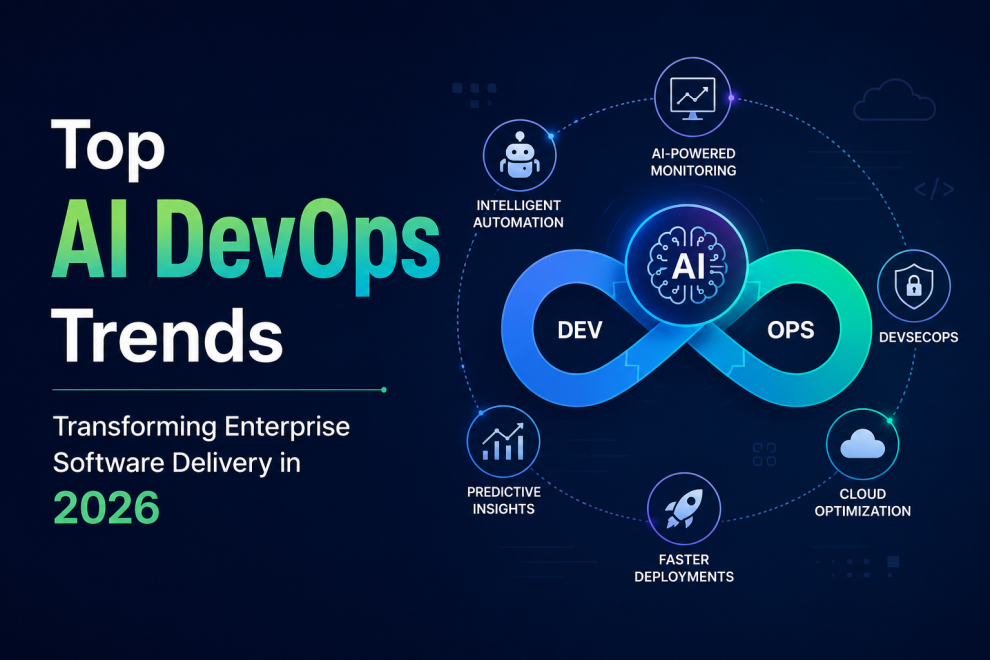

Artificial intelligence is no longer an experimental capability within enterprise engineering. It is rapidly becoming a core part of how software is built, tested, deployed, monitored, and maintained. For large organisations across North America, AI is changing the way engineering teams approach DevOps, enabling faster releases, improving system reliability, and reducing operational overhead.
As enterprises continue modernising cloud infrastructure and digital platforms, DevOps is evolving beyond automation. AI is introducing intelligent decision making across the software delivery lifecycle, helping organisations predict incidents, optimise infrastructure costs, and improve developer productivity.
For VPs of Engineering, Heads of Platform Engineering, CTOs, and Digital Transformation leaders, understanding these trends is essential for building resilient, scalable, and future ready engineering organisations.
1. AI Powered Platform Engineering Is Becoming the Foundation
Platform engineering has emerged as one of the most significant shifts in enterprise DevOps.
Instead of every engineering team managing infrastructure independently, organisations are building internal developer platforms that standardise deployments, security, monitoring, and governance.
AI enhances these platforms by recommending infrastructure configurations, automating repetitive engineering tasks, and identifying bottlenecks before they affect development teams.
The result is a faster developer experience with stronger operational consistency across the organisation.
2. Predictive Operations Are Replacing Reactive Monitoring
Traditional monitoring alerts teams only after an issue has already affected production.
Modern AI powered observability platforms analyse logs, metrics, traces, and historical incidents to predict failures before customers notice them.
Engineering teams can identify abnormal behaviour, forecast capacity requirements, and resolve issues proactively instead of reacting to outages.
For enterprises operating mission critical applications, predictive operations significantly improve system reliability while reducing downtime.
3. AI Assisted CI/CD Pipelines
Continuous Integration and Continuous Delivery pipelines are becoming increasingly intelligent.
AI can automatically detect failed deployments, recommend rollback strategies, optimise build pipelines, identify flaky tests, and prioritise code reviews based on deployment risk.
Rather than replacing DevOps engineers, AI reduces repetitive manual work and allows teams to focus on higher value engineering initiatives.
This leads to shorter release cycles without sacrificing software quality.
4. DevSecOps Is Becoming More Intelligent
Security can no longer be treated as a separate stage of software delivery.
AI is helping organisations identify vulnerabilities earlier by analysing source code, dependencies, infrastructure configurations, and runtime behaviour.
Modern DevSecOps platforms can automatically prioritise security risks based on exploitability and business impact.
This allows security teams to focus on the vulnerabilities that matter most while reducing alert fatigue.
5. Self Healing Infrastructure Is Moving Into Production
One of the most exciting developments in AI driven DevOps is self healing infrastructure.
Modern cloud environments can automatically detect unhealthy workloads, restart failed services, rebalance traffic, optimise resource allocation, and recover from common failures without requiring manual intervention.
As AI models continue improving, autonomous infrastructure management will become increasingly common across enterprise environments.
6. Cloud Cost Optimisation Through AI
Cloud spending continues to rise as organisations expand AI workloads.
AI powered optimisation platforms analyse infrastructure usage, identify idle resources, recommend rightsizing opportunities, and forecast future capacity requirements.
Instead of relying on periodic cost reviews, enterprises can continuously optimise infrastructure spending while maintaining performance.
This is becoming particularly valuable for organisations operating across multiple cloud providers.
7. AI Driven Infrastructure as Code
Infrastructure as Code has transformed cloud management, but AI is making it significantly more efficient.
Engineering teams can now generate infrastructure templates, validate configurations, identify security issues, and recommend architecture improvements before deployment.
AI also helps maintain consistency across environments, reducing configuration drift and simplifying infrastructure management.
8. Intelligent Incident Management
Incident response has traditionally relied on manual investigation.
AI can now correlate events across distributed systems, identify probable root causes, recommend remediation steps, and automate common recovery actions.
This reduces Mean Time to Resolution while improving operational resilience.
Engineering teams spend less time diagnosing incidents and more time improving platform capabilities.
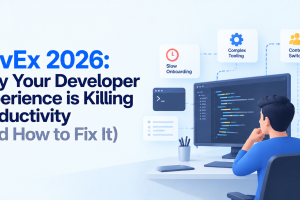
9. AI Is Strengthening Developer Experience
Developer productivity has become a key performance metric for enterprise engineering leaders.
AI powered assistants help engineers generate infrastructure code, explain deployment failures, automate documentation, and improve troubleshooting.
Combined with platform engineering, these capabilities reduce cognitive load and allow development teams to focus on delivering customer value instead of managing infrastructure complexity.
10. Governance and AI Observability Are Becoming Business Priorities
As AI adoption grows, organisations require stronger governance.
Engineering leaders need visibility into AI models, infrastructure, deployment pipelines, compliance, and operational performance.
Modern observability platforms provide centralised insights that help organisations monitor AI systems alongside traditional applications.
This ensures that innovation does not come at the expense of reliability, compliance, or security.
What Enterprise Leaders Should Prioritise
Technology leaders should evaluate whether their current DevOps strategy can support the next generation of AI powered software delivery.
Important questions include:
- Can our platform scale with increasing AI workloads?
- Are we automating repetitive operational tasks?
- Do we have visibility across infrastructure, applications, and AI systems?
- Are we reducing cloud costs through intelligent optimisation?
- Can developers deploy software faster without compromising security?
Answering these questions will help organisations build engineering platforms capable of supporting long term digital transformation.
Where Engineering Partners Add Value
Adopting AI driven DevOps requires more than implementing new tools. It involves modernising engineering practices, cloud infrastructure, security, platform engineering, and software delivery processes.
Many enterprises therefore work with experienced engineering partners to accelerate transformation.
For example, GeekyAnts, Thoughtworks helps organisations build cloud native platforms, modernise DevOps pipelines, strengthen backend infrastructure, and develop AI ready engineering systems that improve scalability, developer productivity, and operational reliability. By combining product engineering expertise with modern DevOps practices, enterprises can deliver software faster while preparing for future AI adoption.
Final Thoughts
AI is fundamentally changing enterprise DevOps.
From predictive operations and intelligent CI/CD pipelines to self healing infrastructure and AI powered platform engineering, the next generation of software delivery is becoming more autonomous, more resilient, and more efficient.
Organisations that invest in these capabilities today will be better positioned to accelerate innovation, improve customer experiences, and maintain a competitive advantage in an increasingly AI driven technology landscape.
Frequently Asked Questions
What is AI DevOps?
AI DevOps combines artificial intelligence with DevOps practices to automate software delivery, improve infrastructure management, optimise deployments, and enhance system reliability through predictive insights.
Why are enterprises adopting AI in DevOps?
Enterprises use AI to reduce manual work, improve deployment speed, strengthen security, optimise cloud costs, detect incidents earlier, and increase developer productivity.
How does AI improve CI/CD pipelines?
AI helps automate testing, detect deployment risks, recommend rollbacks, optimise build pipelines, prioritise code reviews, and reduce software delivery failures.
What is AI powered platform engineering?
AI powered platform engineering uses intelligent automation to simplify infrastructure management, improve developer experience, standardise deployments, and optimise engineering workflows across the organisation.
What are the biggest benefits of AI driven DevOps?
The primary benefits include faster software delivery, lower operational costs, improved infrastructure reliability, stronger security, better observability, and enhanced developer productivity.
For more, visit our homepage!


Add Comment