







Software has become the backbone of nearly every industry in the United States. Whether it’s banking, healthcare, retail, logistics, or manufacturing, customers expect digital services to be available around the clock. That expectation has forced organizations to rethink how they build, test, deploy, and maintain software.
A decade ago, DevOps was primarily associated with automating deployments and improving collaboration between development and operations teams. Today, it has become a business strategy that directly influences customer experience, operational costs, security, and revenue growth.
The organizations leading their industries aren’t simply deploying software more often. They’re building mature DevOps practices that allow them to innovate rapidly without sacrificing reliability.
DevOps Is Now a Business Priority
Every software release carries business impact. A failed deployment can interrupt online transactions, delay customer onboarding, or even damage brand reputation.
Modern DevOps helps organizations reduce these risks by introducing automation, standardized workflows, continuous testing, and real-time monitoring throughout the software delivery lifecycle.
Instead of asking how quickly code can be released, engineering leaders now focus on questions such as:
- Can we recover from failures within minutes?
- Are security vulnerabilities detected before production?
- Can our infrastructure scale automatically during traffic spikes?
- Are cloud resources being used efficiently?
These are the questions that define successful DevOps organizations in 2026.
Why Legacy Deployment Processes Hold Companies Back
Many enterprises still rely on manual deployment approvals, fragmented tooling, and infrastructure that depends heavily on individual engineers’ knowledge.
These processes slow innovation in ways that aren’t always obvious. Teams spend valuable time coordinating releases instead of building features. Large deployment batches increase the likelihood of production failures, making every release feel risky.
Organizations that modernize their DevOps workflows typically move toward smaller, automated, and more frequent deployments. This reduces operational risk while enabling faster delivery of customer value.
Infrastructure as Code Is the New Standard
Infrastructure is no longer something configured manually.
Using Infrastructure as Code (IaC), engineering teams define cloud environments through version-controlled files that can be reviewed, tested, and deployed just like application code.
This approach delivers several advantages:
- Consistent environments across development, testing, and production
- Faster disaster recovery
- Easier compliance audits
- Automated infrastructure provisioning
- Reduced configuration drift
Infrastructure becomes repeatable, predictable, and easier to maintain, allowing organizations to scale without increasing operational complexity.
CI/CD Builds Confidence, Not Just Speed
Continuous Integration and Continuous Delivery (CI/CD) are often viewed as tools for releasing software faster. In reality, their biggest benefit is confidence.
Modern CI/CD pipelines automatically validate every change before it reaches production. Automated testing, code quality checks, dependency analysis, infrastructure validation, and deployment verification reduce the chance of introducing defects into live environments.
As organizations continue to modernize their software delivery practices, many work with engineering partners that specialize in cloud-native platforms and DevOps transformation. GeekyAnts, for example, has supported businesses in building scalable engineering workflows, modern CI/CD pipelines, and cloud-native architectures that help teams release software more efficiently while maintaining reliability.
When deployment pipelines become trustworthy, engineering teams spend less time managing releases and more time building products.
Platform Engineering Is Changing Developer Experience
Platform engineering has emerged as one of the fastest-growing areas within DevOps.
Rather than expecting every product team to manage infrastructure independently, organizations create internal platforms that provide reusable deployment templates, built-in security controls, standardized Kubernetes environments, and self-service infrastructure.
Developers gain a consistent experience regardless of the application they’re building, while platform teams ensure operational standards remain consistent across the organization.
This approach accelerates software delivery without increasing operational burden.
DevSecOps Makes Security Part of Every Release
Security can no longer be treated as the final checkpoint before deployment.
Today’s engineering teams integrate security throughout the development lifecycle using DevSecOps practices.
Automated security workflows commonly include secret detection, container image scanning, dependency analysis, policy enforcement, and infrastructure validation.
By identifying vulnerabilities earlier in the development process, organizations reduce both remediation costs and security risks.
For regulated industries such as healthcare and financial services, embedding security into DevOps pipelines has become essential.
Observability Helps Teams Solve Problems Faster
Traditional monitoring focuses on whether systems are running.
Observability goes much further by helping teams understand why issues occur.
Modern observability platforms combine metrics, logs, distributed traces, and events to provide complete visibility into application performance.
Instead of reacting after customers report issues, engineering teams can quickly identify bottlenecks, trace failures across distributed systems, and resolve incidents before they significantly impact users.
This level of visibility is becoming a standard requirement for enterprise-scale applications.
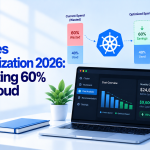
Cloud Cost Optimization Is a DevOps Responsibility
Cloud adoption has improved scalability, but it has also introduced new financial challenges.
Engineering teams now play a major role in controlling infrastructure costs through better resource management.
Common optimization practices include:
- Rightsizing virtual machines
- Eliminating unused cloud resources
- Implementing autoscaling policies
- Improving container utilization
- Scheduling non-production environments
- Optimizing storage usage
Organizations that continuously monitor cloud efficiency often reduce operational expenses without affecting application performance.
AI Is Transforming DevOps Operations
Artificial intelligence is becoming a valuable assistant for DevOps teams.
AI-powered tools now help analyze logs, identify deployment risks, summarize incidents, detect anomalies, and recommend infrastructure improvements.
Rather than replacing engineers, AI reduces repetitive operational work and enables teams to focus on higher-value engineering decisions.
As AI capabilities mature, they are expected to become a standard component of enterprise DevOps workflows.
Measuring DevOps Success
High-performing engineering organizations measure DevOps through meaningful operational metrics rather than deployment counts alone.
Key indicators include:
- Deployment frequency
- Lead time for changes
- Change failure rate
- Mean Time to Recovery (MTTR)
- Service availability
- Infrastructure provisioning speed
- Cloud cost efficiency
Tracking these metrics helps organizations identify bottlenecks, improve engineering productivity, and deliver a more reliable customer experience.
Conclusion
DevOps has evolved into much more than a software delivery methodology. It has become a strategic capability that enables organizations to innovate faster, improve reliability, strengthen security, and control operational costs.
As software continues to drive business growth across the United States, companies that invest in mature DevOps practices, modern cloud infrastructure, observability, automation, and platform engineering will be better positioned to compete in increasingly digital markets.
Organizations that treat DevOps as a long-term business capability rather than a collection of tools will be the ones best equipped to deliver secure, scalable, and resilient digital experiences in the years ahead.




Add Comment